

LOC Research Library
Welcome to the LOC Research LibraryThe Left of Center Research Library is dedicated to the belief that the visual and performing arts are powerful educational tools that promote cross-cultural respect and understanding. We strive to provide a space where diverse local, national, and international audiences can explore different kinds of artistic perspectives and develop an understanding of the cultures that produced them.
Our Commitment
Access and Diversity
Lifelong Learning
Cultural Preservation
Creative Inspiration
Research and Visitor GuidelinesWe serve as a hub for research, stimulating scholarship in art history while assisting artists in the development of their creative projects. We provide an online catalog and professional staff to help you navigate the collection and the physical space.Policies
In-Library Use: Because our items are fragile, unique, and specifically curated, the collection is for non-circulating, on-site use.
Appointments: You are encouraged to make an appointment so that we can give you the best service. Call 702-647-7378 for more information or to set an appointment.
Thanks to the generous contributions of Bill White, the estate of Calvin B. Jones, Vivian Fully, and many others, we preserve and provide access to a rich array of published literary and art resources. Our specialized subject areas include:
Specialized Subject Areas
Art & Design
Art History
Drawing
Graphic Design
Fiber Art
Exhibit Catalogs
Painting
Biography
Fiction
Non-Fiction
Poetry
Political Viewpoints
Literary Forms
African American Art
Harlem Renaissance
History of Enslavement
Diverse Regions
Culture & History
Join the Community: Become a Member
Research is rarely a solo journey—it thrives when supported by a community of like-minded thinkers. By becoming a member of Left of Center, you don’t just gain access to our shelves; you help sustain a vital resource for independent inquiry.
Membership Benefits:
Circulation Privileges: Take the research home with you. Members can check out books from our circulating collection.
Curatorial Requests: Suggest new titles or specific areas of focus for our upcoming acquisitions.
Community Events: Receive early invitations to our guest lectures, reading groups, and symposiums.
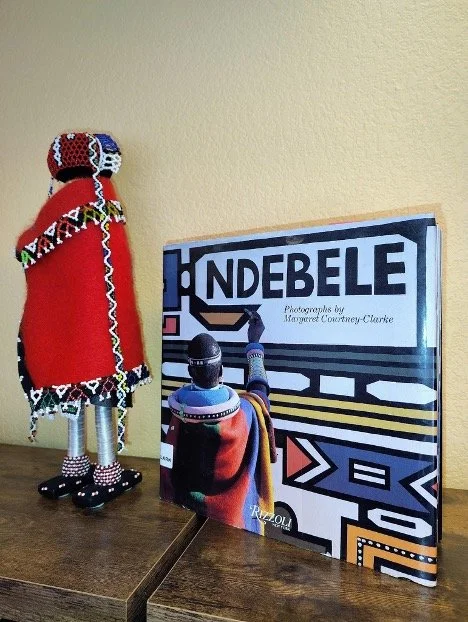
Ndebele: The Art of an African Tribe
This coffee table edition serves as a vivid chronicle, showcasing 180 color photographs. The collection captures the abstract motifs that embellish the exterior walls of mud-wall dwellings in Ndebele South African villages. Also featured are vibrant images of the intricate beadwork that adorns both daily attire and ceremonial vestments. The Left of Center Museum Collection of African Art further honors this aesthetic by featuring paintings and traditional dolls of Esta Mahlangu, a preeminent visual artist and esteemed cultural ambassador of the Ndebele nation.
Photographs by Margaret Courtney-Clarke
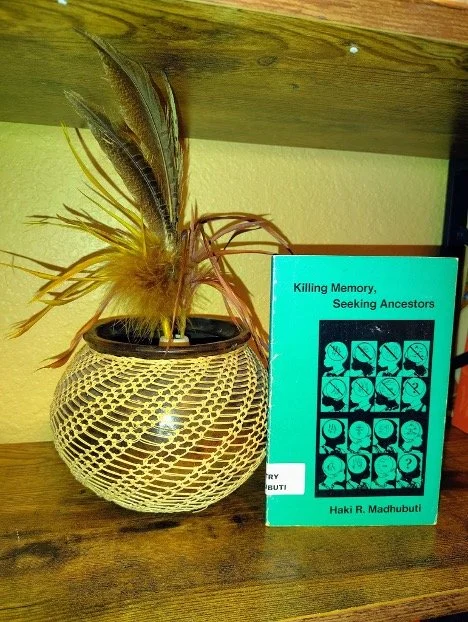
Killing Memory, Seeking Ancestors
Haki R. Madhubuti (Don L. Lee)
Authored by the distinguished award-winning poet, educator and publisher Haki R. Madhubuti, founder of Third World Press, considered the oldest independent Black publishing house in the United States. The book opens with an evocative prologue that examines what Afrika and Afrikan American struggle has taught Madhubuti. The twenty seminal aphorisms may spark deep, engaging discourse.
The poetry is written in the style of the Black Arts Movement, painting a vivid portrait of the African American experience of revolutionary consciousness, cultural identity and heritage.
This specific volume is a prestigious autographed copy, graciously donated from the estate of Calvin Jones.
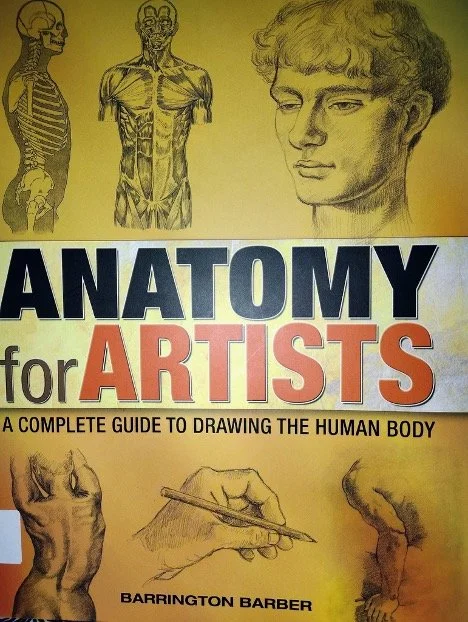
Anatomy for Artists: A Complete Guide to Drawing the Human Body
Barrington Barber
This comprehensive guide is designed to assist both novice and seasoned masters in synthesizing complex human anatomy into artistic excellence.
Utilizing nearly 500 illustrations, the guide provides a quick visual reference format that breaks down the human figure into basic forms over dense medical jargon. The technical introduction may be intimidating, but absorb how the guide emphasizes the nuances of kinesis, teaching artists to distinguish between the anatomical tensions of a body bending versus one twisting.
The descriptions are so lucid and accessible that even a non-artist could utilize the diagram to communicate specific physical ailments to a medical professional.